Minor surgery under local anesthesia

Correction of excess skin on the upper eyelids
Upper blepharoplasty is a surgical procedure performed with local anesthesia, which allows the controlled removal of excess skin on the upper eyelids and, where necessary, the correction of the associated fat deposits.
With advancing age, the skin of the eyelids can lose its elasticity and excess skin may appear, giving the eyes a tired or aged appearance and, in more pronounced cases, causing a sensation of heavy eyelids or limiting the upper field of vision.
The procedure aims to achieve a more open and rested gaze, while preserving the expressiveness and natural appearance of the face.
Upper blepharoplasty may be recommended in cases of:
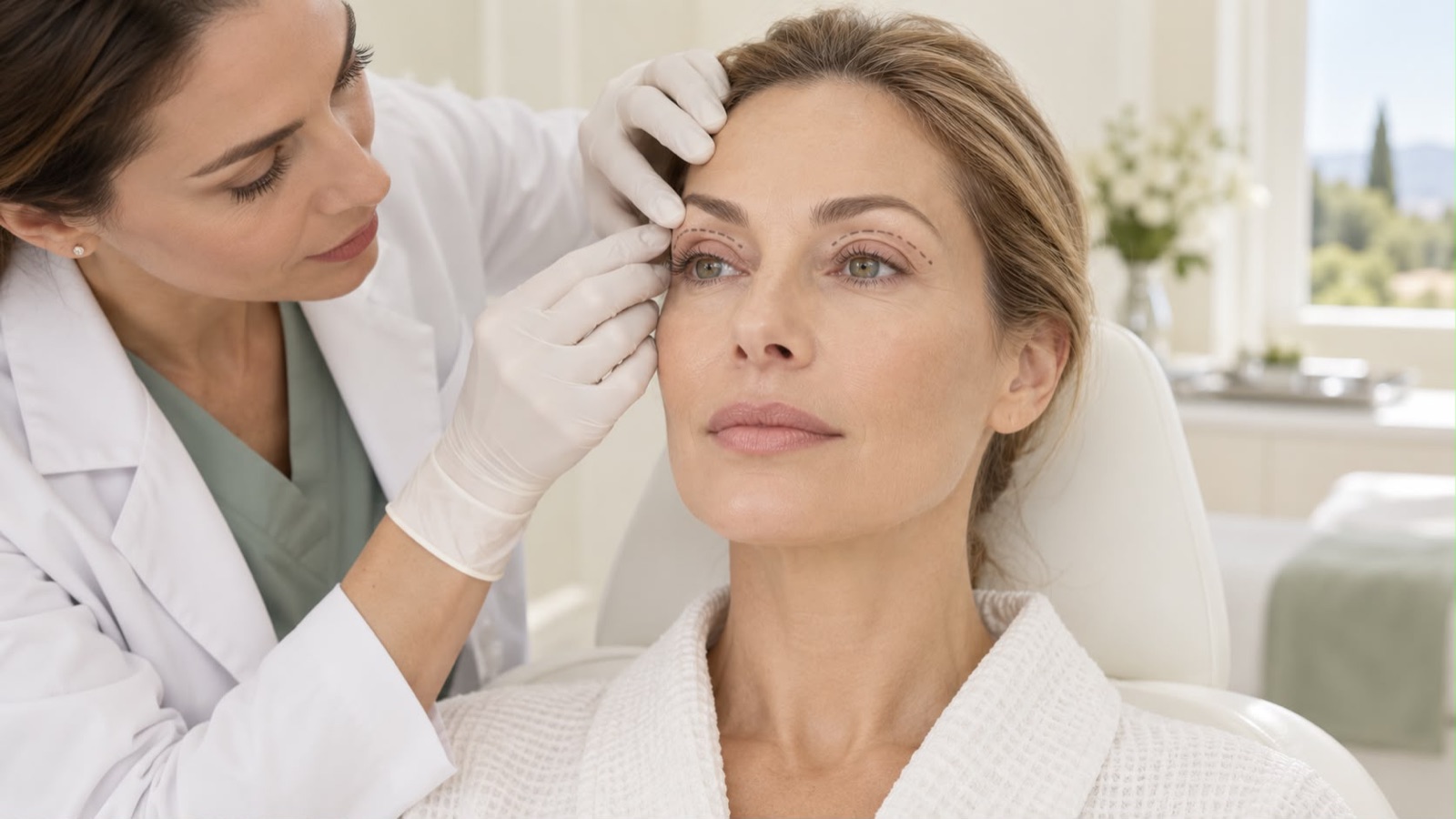
The procedure is carried out with local anesthesia.
The incision is usually positioned in the natural crease of the upper eyelid, so that the scar is as discreet as possible after healing.
The excess skin is removed in a controlled manner and, when the patient's anatomy requires it, the fat deposits may also be addressed.
The procedure is personalized according to the anatomy of the eyelids and the intended result, with care to preserve the natural expressiveness of the eyes.
In the first days after the procedure, swelling, bruising, a sensation of tightness and mild local tenderness are normal. These decrease progressively, usually most noticeably during the first week.
The sutures are generally removed approximately 5–7 days after the procedure, depending on local progress and the surgeon's instructions.
A return to social activities is generally possible after approximately 7–14 days, depending on how long the swelling and bruising persist and on individual progress.
The scar is more visible at first but, being positioned in the natural crease of the eyelid, it fades progressively over the following months.
During the recovery period, it is important to follow the postoperative instructions given by the doctor.
Depending on the particularities of the procedure, these may include:
The patient receives individualized postoperative recommendations and is scheduled for a follow-up appointment, including for the assessment of healing and the removal of the sutures.
The first changes become visible as the swelling and bruising subside, and the appearance of the eyelids continues to improve over the following weeks and months.
The intended result is a more open, more rested gaze and a natural appearance, without any unnatural change to the expression of the face.
The results of upper blepharoplasty are generally long-lasting.
The procedure does not, however, stop the natural aging process, and the skin and tissues around the eyes continue to change over time.
Yes. A plastic surgery consultation is necessary before upper blepharoplasty, in order to assess the anatomy of the eyelids, establish the indication and identify any contraindications.
Depending on medical history, ongoing treatments and the particularities of the patient, the doctor may recommend additional tests or investigations before the procedure.
Upper blepharoplasty is performed with local anesthesia, by a specialist in plastic, aesthetic and reconstructive microsurgery.
Results and the recovery period may vary from person to person.
Medical content written and reviewed by Dr. Mihaela Marinescu — Specialist in Geriatrics and Gerontology · Medical Director, Maison Longévité. Last reviewed: 7 October 2026. Meet the medical team
This page is for information and education. It does not replace a medical consultation or the individual recommendations of a healthcare professional.
Book consultation
Fill in the form below and we will contact you to arrange the details of your appointment.
