Medical blog

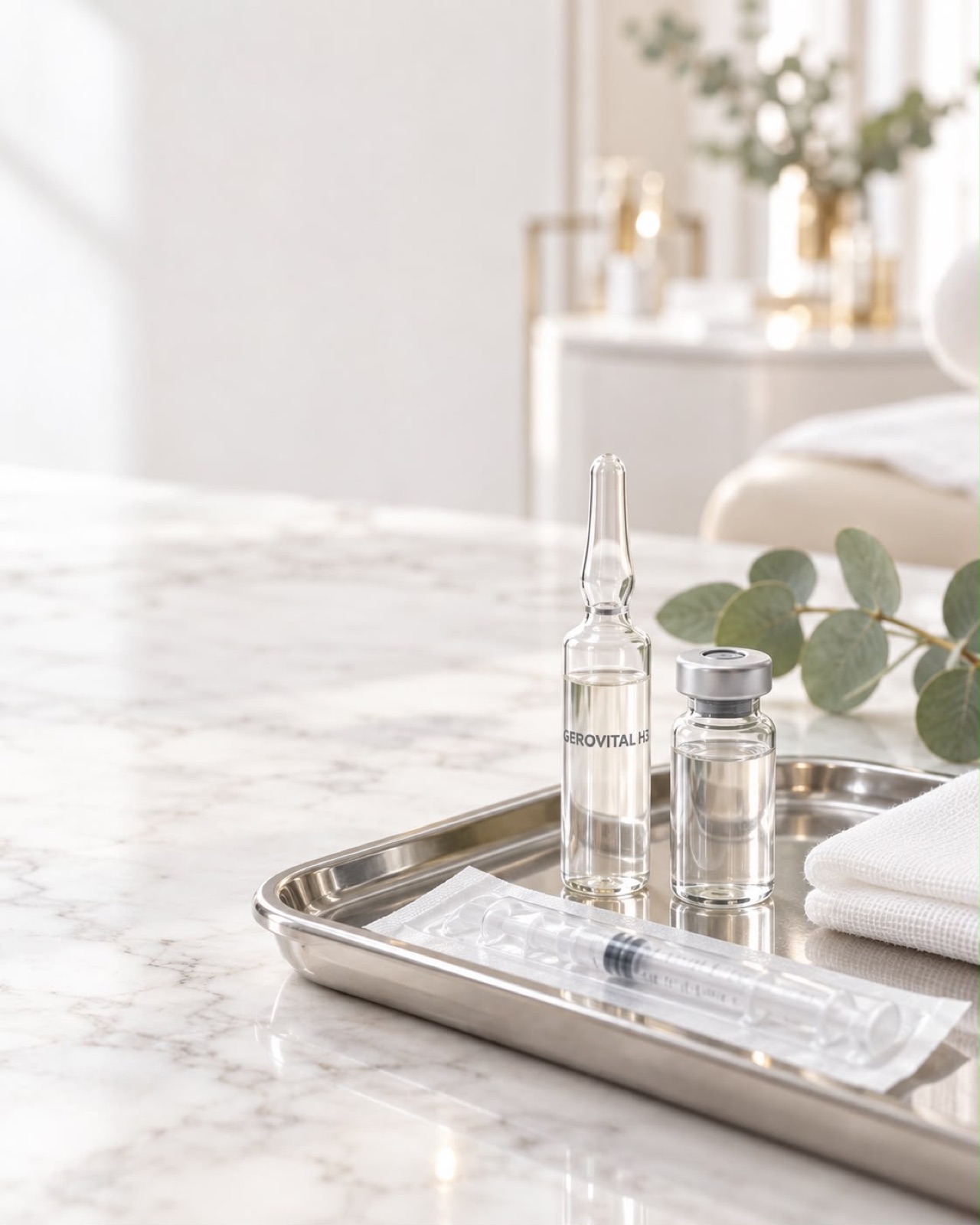
Gerovital H3 is a medicine with a long tradition in longevity medicine, developed in the 1950s by Professor and Academician Ana Aslan, a pioneer of modern gerontology and founder of the first geriatrics institute in the world. At that time, the therapy created by Ana Aslan attracted considerable international interest, being associated with the idea of maintaining vitality and functionality with advancing age. Many public figures of the period were mentioned in connection with these treatments, contributing to the consolidation of Gerovital's reputation as a therapy oriented towards quality of life.
Today, Gerovital H3, in its injectable or oral forms of administration, is integrated into modern slow-aging strategies, which involve supporting the body through the natural aging process, by maintaining biological and functional balance. This is not about stopping aging, but about optimizing the way the body goes through this process. The therapy is addressed to people from the age of 40 onwards, following a medical assessment carried out by the geriatrician, who establishes the person's eligibility for treatment.
The active substance, stabilized procaine, has biological effects that go beyond the classic role of a local anesthetic. Studies have shown that it can influence oxidative stress, vascular function and certain metabolic processes, contributing to the maintenance of cellular homeostasis.
One of its central mechanisms of action is linked to the reduction of oxidative stress. With advancing age, the accumulation of free radicals and lipid peroxidation processes contribute to the degradation of cellular structures. The available data suggest that procaine may have antioxidant effects and a role in protecting cell membranes, supporting their integrity and the optimal functioning of tissues.
Gerovital H3 can influence microcirculation (circulation at capillary level), favoring better cellular oxygenation and nutrition. This aspect is relevant in the context of longevity, because the optimal functioning of capillary circulation supports tissue health and regenerative capacity. In clinical practice, these effects are often correlated with an improvement in general condition, an increase in energy levels and mental clarity, but also with visible effects at skin level, such as a brighter appearance, a more uniform texture and better skin tone.
At neuropsychic level, procaine has a mild influence on monoamine oxidase, an enzyme involved in the metabolism of neurotransmitters. This interaction may contribute to mood stabilization, to the reduction of anxiety and to the improvement of sleep quality. Although these effects vary from patient to patient, they are frequently reported in clinical practice.
The administration of injectable Gerovital H3 is carried out exclusively under medical supervision, and patient selection is essential for the safety of the therapy. The classic injectable regimen involves administration three times a week for four weeks, with the possibility of repeating the courses depending on the medical indication. In practice, two or three courses per year are generally sufficient to maintain the effects on general condition. On the geriatrician's recommendation, the patient may benefit from a personalized regimen, combining the injectable form of administration with the oral one (tablets).
Before starting the treatment, testing of sensitivity to procaine is mandatory. This includes an initial subcutaneous test, followed by a trial intramuscular administration, in a reduced dose. These steps are necessary in order to rule out hypersensitivity reactions and to ensure tolerance of the therapy.
Gerovital H3 is not administered concomitantly with sulphonamides (with the exception of antidiabetics) and is not combined with anticholinesterase medicines: neostigmine, eserine (physostigmine) and pyridostigmine. There are also clear contraindications such as: pregnancy and breastfeeding, active oncological pathology, cardiac conduction disorders of the second- or third-degree atrioventricular block type without a pacemaker, severe arterial hypotension, epilepsy that is not therapeutically controlled and allergy to procaine. A complete medical assessment remains an essential step before initiating the therapy.
At the Maison Longévité clinic, the use of Gerovital H3 is integrated into a personalized approach, which includes the metabolic, nutritional and functional assessment of the patient. The therapy is not used in isolation, but as part of a broader strategy for supporting longevity and quality of life.
Gerovital H3 remains a relevant therapeutic option for people who wish to age in a balanced way, maintaining their energy, mental clarity and functionality. Through its effects on oxidative stress, microcirculation and neuropsychic balance, this slow-aging therapy contributes to supporting an active longevity.
Dr. Mihaela Marinescu
Specialist in Geriatrics and Gerontology,
International certification in Precision & Anti-Aging Medicine (A4M)
Our team of specialists is here to help you. Fill in the form below and we will contact you as soon as possible.
Last name
First name
Phone
Message (optional)
By pressing the "send" button, I agree to the processing of my personal data (which may also include medical data) for the purpose of the provision of services by the Maison Longévité clinic.
Article published by Maison Longévité Clinic. The information is educational and does not replace a medical consultation.
Medical content written and reviewed by Dr. Mihaela Marinescu — Specialist in Geriatrics and Gerontology · Medical Director, Maison Longévité. Last reviewed: 7 October 2026. Meet the medical team
This page is for information and education. It does not replace a medical consultation or the individual recommendations of a healthcare professional.
Book consultation
Fill in the form below and we will contact you to arrange the details of your appointment.
