Therapies
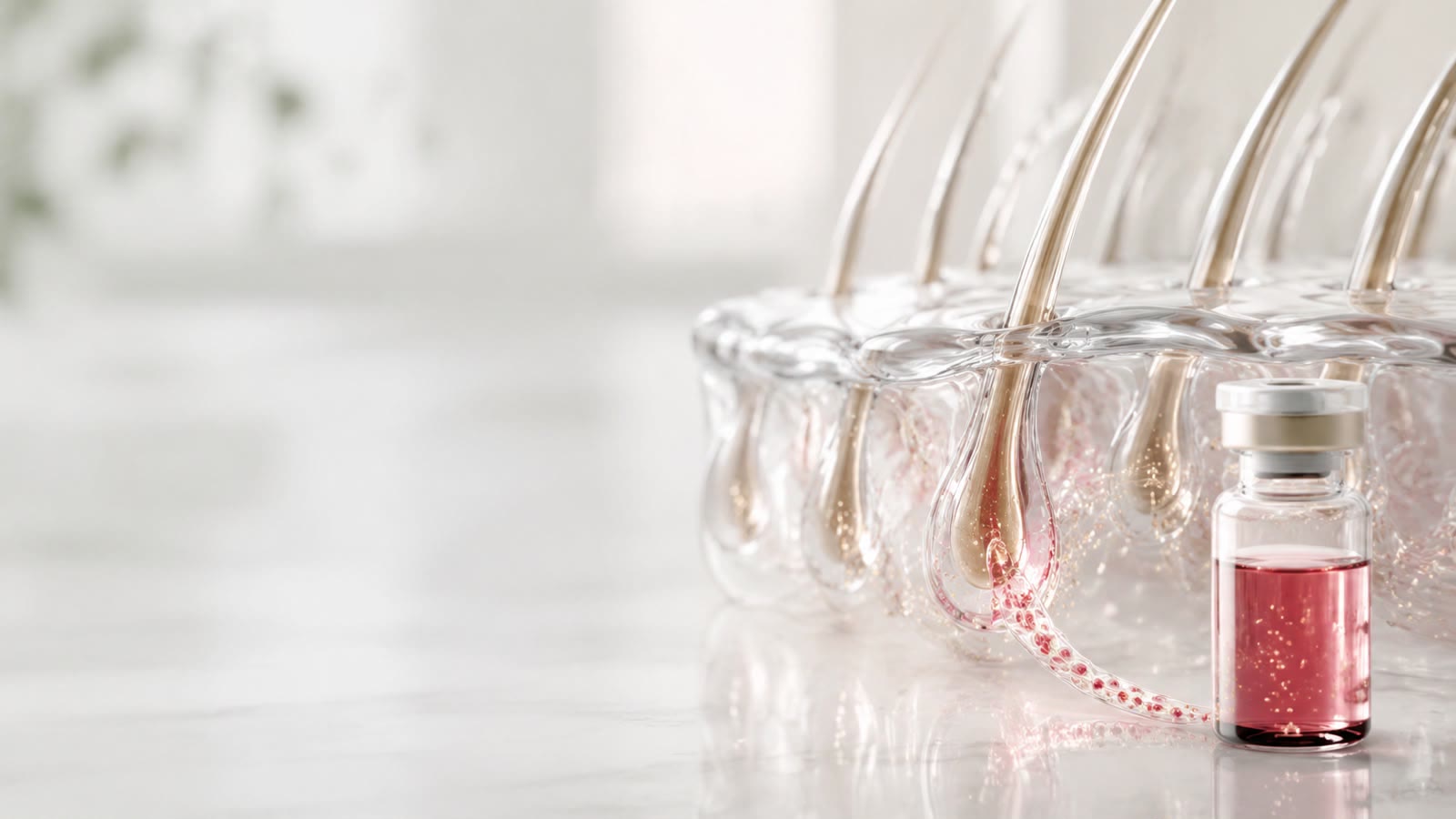
PRP – Platelet-Rich Plasma – is an autologous therapy used in regenerative medicine and aesthetic dermatology to support the natural processes of tissue repair and regeneration.
The particularity of this therapy lies in the fact that the PRP is obtained from the patient's own blood, through a process of separating and concentrating the platelets into a plasma fraction that contains growth factors and other bioactive molecules involved in tissue regeneration.
At Maison Longévité, PRP therapy is performed with RegenLab® / RegenPRP™ technology, a medical system designed for the standardized and reproducible preparation of platelet-rich plasma.
PRP is an autologous plasma fraction with an increased concentration of platelets compared with whole blood.
Platelets are known first of all for their role in coagulation, but they also represent an important source of growth factors and bioactive molecules involved in cell communication, tissue repair and remodeling of the extracellular matrix.
Among the growth factors released by platelets are PDGF, TGF-β, VEGF, EGF, FGF and IGF, involved in different stages of the processes of tissue repair and regeneration.
Through these mechanisms, PRP can support fibroblast activity and the biological processes involved in maintaining and remodeling tissues.
Not all PRP preparations are identical. The method of collection and processing influences the composition of the final product, including the concentration of platelets and the presence of other cellular components.
At Maison Longévité we use the RegenLab® / RegenPRP™ system, intended for obtaining a standardized autologous PRP.
The technology uses dedicated medical tubes and an inert separator gel, which allows the separation of the blood components during centrifugation and the recovery of the platelet-rich plasma fraction.
The RegenPRP™ system allows:
The standardization of the process is important for obtaining a PRP preparation with characteristics that are as constant and predictable as possible from one procedure to another.
In aesthetic dermatology, PRP can be used for facial rejuvenation and the progressive improvement of skin quality.
The growth factors and bioactive molecules released by platelets take part in processes involved in the repair and remodeling of skin tissue.
Depending on the patient's particularities, the treatment may contribute to:
PRP is not a filler and its main objective is not to create volume. The intended effect is regenerative and progressive, through the use of the patient's own biological resources.
The periocular area is one of the regions where the changes associated with the process of skin aging may become visible early.
The fine skin around the eyes may show loss of elasticity, texture changes and the appearance of fine lines.
PRP can be used in protocols dedicated to this region to support regeneration and improve the quality of the periocular skin, without a main volumizing effect.
The treatment is adapted to the anatomy and particularities of this sensitive area.
PRP is also used in dermatology for certain forms of alopecia, one of the most studied indications being androgenetic alopecia.
The growth factors released by platelets may influence biological processes involved in the functioning of the hair follicle and in the growth cycle of the hair.
Depending on the indication and on the patient's particularities, PRP therapy may contribute to:
Before starting the treatment, it is important to assess the cause of the hair loss.
Depending on the case, the physician may recommend additional investigations to identify hormonal, metabolic, nutritional or dermatological factors that may contribute to alopecia.
PRP can be used on its own or integrated into a broader therapeutic protocol, depending on the patient's diagnosis and needs.
The procedure begins with the collection of a small quantity of venous blood, similar to a routine blood draw.
The blood is collected in the RegenLab® system and centrifuged according to the specific protocol. Through the separation process, the platelet-rich plasma fraction – RegenPRP™ – is obtained.
The resulting PRP is then administered through microinjections in the treated area, at facial, periocular or scalp level, depending on the medical indication.
The entire process takes place within the same session, and the administered product is autologous – derived from the patient's own blood.
Immediately after the treatment, redness, sensitivity, mild edema or small bruises may appear temporarily at the injection points.
These reactions are generally transient, and the post-procedure recommendations are adapted to the treated area and to the particularities of each patient.
PRP is a biological therapy with a progressive effect, and the protocol is individualized.
The number of sessions and the interval between them are established by the physician depending on the indication, the treated area, the patient's characteristics and the individual response to the therapy.
After the initial protocol, periodic maintenance sessions may be recommended.
At Maison Longévité, PRP can be integrated into a personalized Skin Longevity strategy, oriented towards supporting the quality and the regenerative capacity of the skin over time.
Depending on the indication, PRP can be used on its own or integrated into protocols that may include microneedling, photobiomodulation with Healite II, Morpheus8, CO₂ laser or other regenerative therapies.
The choice and sequencing of the procedures are established individually, so that each intervention addresses a specific need of the skin.
The objective is to support the tissue's own biological mechanisms and to progressively improve skin quality, in a personalized approach, with natural results.
The indication and the treatment protocol are established by the physician following the consultation and the individual assessment.
Medical content written and reviewed by Dr. Mihaela Marinescu — Specialist in Geriatrics and Gerontology · Medical Director, Maison Longévité. Last reviewed: 7 October 2026. Meet the medical team
This page is for information and education. It does not replace a medical consultation or the individual recommendations of a healthcare professional.
Book consultation
Fill in the form below and we will contact you to arrange the details of your appointment.
